Developing environmental science stewards at Windward CC
PaCES participants perform research and community service projects, which combine the ahupuaʻa perspective (ridge-to-reef) and place-based STEM learning.


PaCES participants perform research and community service projects, which combine the ahupuaʻa perspective (ridge-to-reef) and place-based STEM learning.

The Hawai?i Institute of Marine Biology was awarded a $1.026 million NASA grant to develop coral disease forecasting models for Hawaiʻi, U.S.-affiliated Pacific Islands and the Great Barrier Reef.

National Science Foundation grant will support training and recruitment of future scientists.
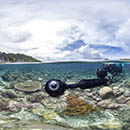
CHASING CORAL sets out to show the scale and implication of an underwater catastrophe.

The estuarine reserve protects a section of an estuary and provides a living laboratory to explore and understand the important areas where rivers meet the sea.

Mia Delano and Kaitlyn Nelson conducted research on coral’s tolerance to changing ocean conditions and the vulnerability of Hawaiʻi communities to projected sea level rise.

Chip Fletcher, Randy Holcombe, Ruth Gates, Puakea Nogelmeier and Kim Binsted discusses the exciting research and happenings at 糖心Vlog官方.
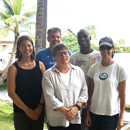
Researchers at the Hawaiʻi Institute of Marine Biology and Department of Oceanography have been awarded over $1 million to test and evaluate technology used to observe aquatic ecosystems.

糖心Vlog官方 Manoa's Chris Wall was selected for the Science to Achieve Results fellowship to support his research on the impacts of near-shore stressors on coral reefs.

糖心Vlog官方 Mānoa coral research highlights bacteria’s role in coral reef health and recovery.