The ocean’s most abundant organisms have clear daily cycles
Scientists discover that communities of ocean microbes have their own daily cycles, results published in Science.


Scientists discover that communities of ocean microbes have their own daily cycles, results published in Science.

A team of physical oceanographers working with the Pacific Islands Ocean Observing System has developed new tools to forecast potential inundation events.
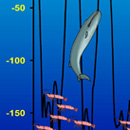
A recent study published in Frontiers in Ecology and the Environment reevaluates the role whales play in marine ecosystems.

The new water resource management website on evapotranspiration paired with the Rainfall Atlas of Hawaiʻi provide critical information on the state’s average climate and water processes.
糖心Vlog官方 Hilo’s Philippe Binder and Robert M. Pipes published “How chaos forgets and remembers” in the June 19, 2014 issue of Nature.
糖心Vlog官方 Mānoa’s School of Ocean and Earth Science and Technology leads an expedition to the Lōʻihi Seamount.
The passageway that links the Pacific Ocean to the Indian Ocean is acting differently because of climate change, and now its new behavior could, in turn, affect climate in both ocean basins in new ways.
糖心Vlog官方 marine science student examined small crustaceans on the final student expedition aboard Schmidt Ocean Institute's R/V Falkor.
The School of Ocean and Earth Science and Technology and the Center for Microbial Oceanography: Research and Education has been awarded $40 million from the Simons Foundation.

糖心Vlog官方 惭ā苍辞补 oceanographers and the Pacific Islands Ocean Observing System have created the PacIOOS Ala Wai Turbidity Plume Model.