Shine bright like a diamond: Team obtains best-ever infrared maps of super-luminous galaxies
Jason Chu and David Sanders use far-infrared images to explore what galaxy collisions on a grand scale look like.


Jason Chu and David Sanders use far-infrared images to explore what galaxy collisions on a grand scale look like.

Coral fragments from Kauaʻi suggest a mega-earthquake from the Aleutian Islands caused the tsunami.

The magazine covers space, ocean and earth sciences, humanities, tropical agriculture, social sciences, health sciences and more.

Institute for Astronomy researchers discover the dividing line of mass that separates stars from brown dwarfs.

Using data from NASA’s Lunar Reconnaissance Orbiter, scientists have identified bright areas near the moon’s south pole that are cold enough to have frost present.

Jennifer Wong-Ala, an environmental science graduate, conducted research to determine how biological and physical factors affect the number of fish surviving.
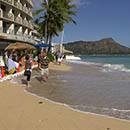
The public has the opportunity to get involved documenting high water levels and related impacts through the King Tides “citizen science” project.

Belle II detector was “rolled-in” to the collision point of the SuperKEKB particle accelerator.
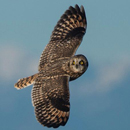
The Pueo Project encourages citizen scientists to report sightings, participate in organized?surveys, and?use photography to document behaviors.

Researchers say clean drinking water and energy cost savings might be achieved by co-locating hydro energy storage systems with reverse osmosis desalination plants.